
Nigeria’s Federal Government has firmly denied allegations of religious persecution, describing a recent report by U.S. congressional committees as an opportunity to deepen bilateral cooperation rather than a verdict on the country’s religious climate.
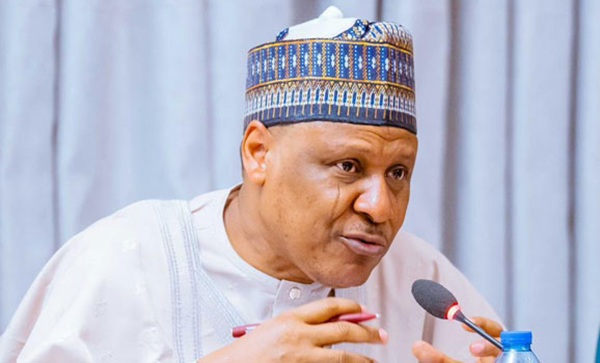
The Minister of Information and National Orientation, Mohammed Idris, said in a statement that while parts of the country continue to grapple with insecurity, there has never been a state-backed policy targeting any religious group.
His comments followed the submission of a joint report by the U.S. House Foreign Affairs Committee and House Appropriations Committee to U.S. President Donald Trump, addressing concerns about Christian persecution in Nigeria.
Idris stressed that the violence confronting Nigeria is rooted in terrorism, banditry, organised criminality and longstanding communal tensions — not government policy or religious discrimination.
“The Constitution of the Federal Republic of Nigeria guarantees freedom of religion and worship for all citizens,” the minister stated, reaffirming the government’s commitment to equal protection under the law.
He acknowledged the devastating toll of insecurity, extending sympathies to victims across faiths, ethnicities and regions.
Under the administration of President Bola Tinubu, the government said it has intensified coordinated military offensives, enhanced intelligence-sharing, and deployed specially trained forest guards to dismantle criminal enclaves and reclaim vulnerable territories.
Authorities also cited expanded surveillance operations, investments in military hardware, and strengthened inter-agency collaboration aimed at neutralising terrorist cells and kidnapping networks.
The congressional report followed months of investigations, including bipartisan fact-finding visits to Nigeria prompted by allegations raised by Congressman Riley Moore.
During their visit, U.S. lawmakers met with top Nigerian officials, including National Security Adviser Nuhu Ribadu, and held consultations with state governors.
Subsequently, U.S. security cooperation reportedly led to an airstrike on a terrorist camp in Sokoto State on December 24.
Moore confirmed via social media that the report had been formally submitted to the White House, praising President Trump for redesignating Nigeria as a Country of Particular Concern (CPC) and reiterating Washington’s resolve to confront extremist violence.
In their recommendations, U.S. lawmakers called for:
A formal U.S.–Nigeria bilateral security agreement to protect vulnerable Christian communities.
Sanctions and visa restrictions against individuals implicated in religious persecution.
Withholding certain U.S. funds pending measurable action by Nigeria.
Technical assistance to curb violence linked to armed Fulani militias.
Repeal of Sharia and blasphemy laws.
Greater coordination with international partners including France, Hungary and the United Kingdom.
Despite the strong recommendations, Abuja described the report as a catalyst for broader collaboration between both nations.
“Nigeria values its longstanding and strategic partnership with the United States,” Idris said, emphasizing mutual interests in security, economic development and regional stability.
He maintained that while Nigeria remains open to constructive dialogue, the government’s primary responsibility remains the protection of all Nigerians — regardless of religion.
The statement underscores Abuja’s determination to counter international criticism while strengthening diplomatic and security ties with Washington amid persistent security challenges.