

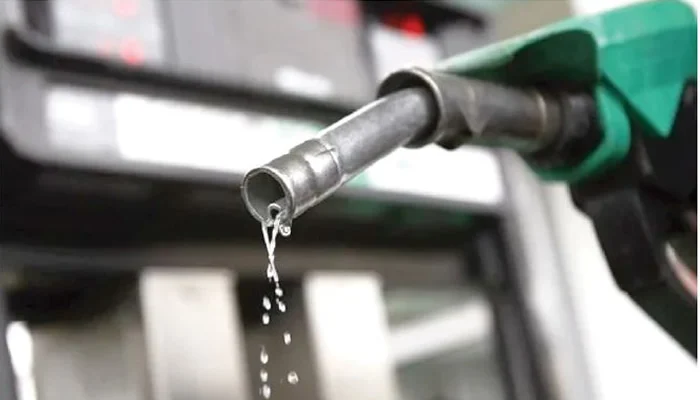
Petrol prices across Nigeria have surged to about N1,300 per litre, raising concerns among businesses and economists about rising operational costs and a potential spike in inflation.
The increase follows a fresh price adjustment by the Dangote Petroleum Refinery, which raised its gantry price of Premium Motor Spirit (PMS) from N995 to N1,175 per litre within days. The development has triggered swift pump price increases at filling stations nationwide, with some outlets selling petrol between N1,250 and N1,400 per litre.
The surge is linked to rising global crude oil prices amid tensions involving the United States, Israel and Iran, which have disrupted international oil markets and heightened supply concerns.
Industry checks showed that several filling stations quickly adjusted their pump prices after the refinery’s announcement. Stations in major cities such as Abuja and Lagos raised prices above N1,200 per litre, reflecting the new supply cost.
The adjustment represents the third upward revision in petrol prices within a week, fueling fears of another inflation wave in Nigeria’s fragile economy.
Members of the Organised Private Sector warned that the fuel price hike would likely push up transportation, logistics and food distribution costs.
The Director-General of the Lagos Chamber of Commerce and Industry (LCCI), Chinyere Almona, said the increase is already affecting logistics and supply chains.
According to her, rising fuel prices typically translate into higher transport fares and food prices due to the heavy reliance on petrol-powered transportation across the country.
She also warned that the ongoing crisis in the Middle East could worsen global freight costs and increase the price of imported goods.
Similarly, the Director-General of the Nigeria Employers’ Consultative Association (NECA), Adewale Oyerinde, cautioned that higher energy costs could intensify inflationary pressures in Nigeria.
He explained that increased fuel prices raise the cost of production and distribution across sectors such as agriculture and manufacturing, forcing businesses to pass the additional burden to consumers.
Responding to the criticism, the refinery defended the price increase, citing extreme volatility in global oil markets.
The Managing Director of the refinery, David Bird, said crude oil prices had jumped from the mid-$60 range to nearly $120 per barrel within a week, significantly increasing operational costs.
He noted that the refinery purchases crude oil at international benchmark prices and remains exposed to global market forces, including freight, insurance and financing costs.
According to Bird, tanker freight costs have surged dramatically, rising from about $800,000 to roughly $3.5 million per shipment due to heightened geopolitical tensions.
Despite the challenges, he said the refinery continues to operate at its full nameplate capacity of about 650,000 barrels per day, with the potential to reach 700,000 barrels per day.
The Nigeria Labour Congress (NLC) criticised the latest increase, arguing that the situation exposes weaknesses in Nigeria’s downstream petroleum sector.
The union’s Assistant General Secretary, Christopher Onyeka, said the price surge raises questions about the country’s domestic refining capacity and its ability to shield Nigerians from global oil shocks.
According to him, if Nigeria were fully refining petroleum products locally, international crises would have less impact on domestic petrol prices.
Economic analysts say the rising fuel price could quickly trigger inflation through higher transportation and logistics costs.
Economist Aliyu Ilias said Nigeria remains vulnerable to global oil price fluctuations because the country still lacks strong domestic mechanisms to cushion economic shocks.
He warned that the current petrol price of around N1,250 per litre is already affecting the cost of goods and services.
A former chief economist at Zenith Bank, Marcel Okeke, explained that transportation costs are usually the first to rise whenever fuel prices increase.
“When transportation costs go up, the prices of food, rent, logistics, and other services inevitably follow,” he said.
Business groups and industry stakeholders have urged the Federal Government to strengthen local refining capacity to protect the economy from global oil market shocks.
The President of the Association of Small Business Owners of Nigeria (ASBON), Femi Egbesola, warned that small and medium enterprises would be among the hardest hit by rising fuel costs.
He said higher energy costs would increase production and distribution expenses for businesses, ultimately leading to higher consumer prices.
Stakeholders also urged the Nigerian National Petroleum Company Limited (NNPCL) to accelerate production at domestic refineries, including the facilities in Port Harcourt and Warri, to reduce dependence on volatile global oil markets.
Analysts warn that if the Middle East conflict persists, petrol prices in Nigeria could climb even higher, potentially approaching N2,000 per litre in the coming months.