
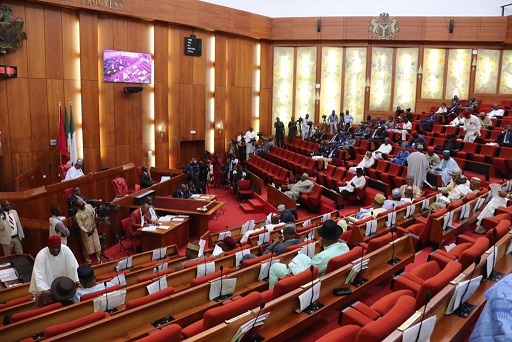
With the 2027 general elections drawing closer, a major political shift is underway as federal lawmakers begin to pivot from legislative duties to executive ambitions in their home states.
Across both chambers of the National Assembly, senators and members of the House of Representatives are positioning themselves for governorship contests, setting the stage for a fiercely competitive election cycle.
This growing trend underscores the increasing appeal of executive power, with many lawmakers seeking the authority and influence that come with leading a state—far beyond the reach of legislative roles.
Already, quiet consultations, strategic meetings, and alliance-building efforts are in motion ahead of party primaries. For many aspirants, the coming months will determine whether their ambitions translate into viable campaigns or are derailed by internal party politics and zoning arrangements.
Senate: Testing Political Strength
In the Senate, more than a dozen lawmakers are either openly declaring interest or discreetly preparing for governorship bids. Historically, the Red Chamber has served as a springboard for higher office, offering visibility, networks, and access to resources.
Kwara State has emerged as a hotspot, with three serving senators jostling for the top seat. Each represents a different district and brings a distinct political approach—ranging from technocratic credentials to grassroots mobilization and regional advocacy.
Similarly, Nasarawa presents a competitive field, with contenders leveraging legislative experience, business backgrounds, and shifting party loyalties to build momentum.
In the Northeast, Bauchi and Yobe states are witnessing a generational mix of aspirants. While some candidates rely on long-standing political structures, others represent a younger, more dynamic wave aiming to reshape leadership narratives.
Yobe stands out, with all three senators reportedly in the race, reflecting an intense intra-state contest that could redefine its political landscape.
Northwest and Southwest Dynamics
In Kano, the contest is shaped by entrenched political structures and evolving alliances, especially amid recent party defections that have complicated calculations within the ruling party.
Meanwhile, in the Southwest, Ogun State appears to be taking a more coordinated approach, with party stakeholders rallying around a consensus candidate to avoid internal divisions.
Oyo State, however, presents a contrasting picture, as aspirants deploy different strategies—some appealing to elite networks, others building strong grassroots followings—while navigating zoning and coalition complexities.
South-South and Beyond
In Cross River, consistent engagement with constituents has strengthened one senator’s local appeal, though broader political dynamics such as zoning and party alignments remain निर्णative factors.
House of Representatives: Rising Contenders
In the Green Chamber, a mix of first-time lawmakers and experienced legislators are also eyeing governorship seats.
Some have openly declared their intentions, while others are testing the waters through consultations and subtle political signaling.
In Abia, a high-ranking lawmaker is engaging stakeholders cautiously, a move seen as strategic positioning that could significantly influence the state’s political direction.
Oyo and Ogun states are again key battlegrounds, with multiple House members leveraging local support bases, policy ideas, and prior political experience to stake their claims.
Elsewhere, in Nasarawa and Gombe, lawmakers are weighing their chances, holding consultations, and building networks necessary for statewide campaigns.
Kwara remains one of the most crowded arenas, with fresh entrants adding to an already competitive field and intensifying the race.
The Bigger Picture
The surge in governorship ambitions highlights a broader reality: executive power remains the ultimate prize in Nigerian politics.
While legislative roles offer influence and national relevance, the governorship provides direct control over policies, resources, and political structures at the state level.
However, the path to securing party tickets is far from straightforward. Zoning arrangements, internal party negotiations, and elite consensus often outweigh popularity or track record.
A recent amendment to electoral laws—prohibiting participation in multiple primaries—has also raised the stakes, forcing lawmakers to make decisive political choices.
As primaries approach, political maneuvering will intensify, alliances will shift, and some ambitions will inevitably be cut short.
By the end of the process, the National Assembly itself may witness a significant shake-up, as many of its members either transition to executive roles or exit the race altogether.
One thing is certain: the road to 2027 is already shaping up to be a defining chapter in Nigeria’s political evolution.