
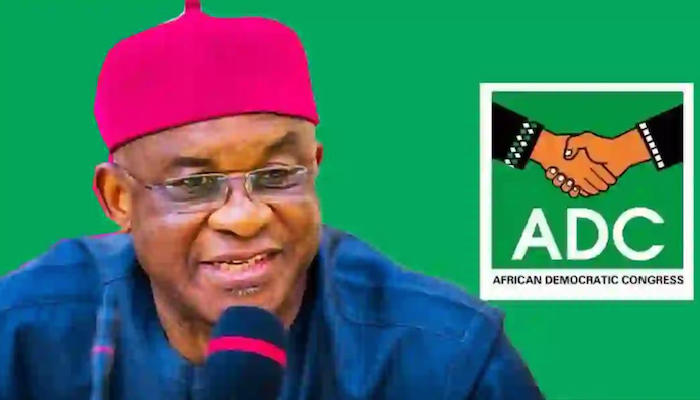
The leadership crisis in the African Democratic Congress (ADC) has taken a dramatic turn as a group of state chairmen announced a fresh takeover, further deepening divisions within the opposition party.
The move follows a decision by the Independent National Electoral Commission (INEC) to withhold recognition from both the faction led by David Mark and rival claimant Nafiu Bala Gombe.
New Power Bloc Emerges
In a bold step, 25 state chairmen—members of the party’s National Executive Committee (NEC)—declared themselves the legitimate interim leadership, citing constitutional backing.
The newly formed 20-member interim team is led by Kogi State Chairman Kingsley Temitope Ogah, with Edo State Chairman Kennedy Odion serving as secretary.
According to the group, their intervention is aimed at “rescuing the platform from jeopardy” and stabilising the party ahead of future elections.
Rival Camp Pushes Back
However, the camp loyal to David Mark swiftly rejected the takeover claim.
Spokesman Bolaji Abdullahi dismissed the move as a plot by “fifth columnists” seeking to undermine the party, insisting that the recognised leadership remains intact and focused on preparing for upcoming elections.
He also accused the ruling All Progressives Congress (APC) of fueling the crisis to weaken the ADC and force it out of contention.
INEC Decision Fuels Confusion
The crisis escalated after INEC withdrew recognition from the party’s interim leadership, including David Mark and former Osun State governor Rauf Aregbesola, following a Court of Appeal ruling.
This decision effectively created a leadership vacuum—one now being interpreted differently by competing factions.
Constitution at the Center of Dispute
At the heart of the conflict is the ADC constitution, particularly provisions outlining the powers of the NEC.
While the NEC is empowered to manage party affairs, the document does not explicitly state that state chairmen can assume control in the absence of a National Working Committee (NWC), leading to conflicting interpretations.
The breakaway chairmen argue that, as elected NEC members, they are the only legitimate authority left to steer the party.
Race Against Time
The interim leadership says it will govern for two to three weeks pending a national convention scheduled for April 14.
They warned that failure to act decisively could jeopardise the party’s ability to field candidates in future elections—a risk that could lead to deregistration.
Despite the turmoil, Abdullahi maintained that the ADC will participate in the 2027 elections, expressing confidence that the judiciary will overturn INEC’s decision.
Uncertain Future for ADC
With multiple factions laying claim to leadership and legal battles ongoing, the ADC faces a critical moment that could define its survival as a viable opposition force.
For now, the party remains deeply divided—with its unity, credibility, and electoral prospects hanging in the balance.