 as the Orile-Alagbado monarch marks his first year on the throne, citing inclusive and development-driven leadership.)
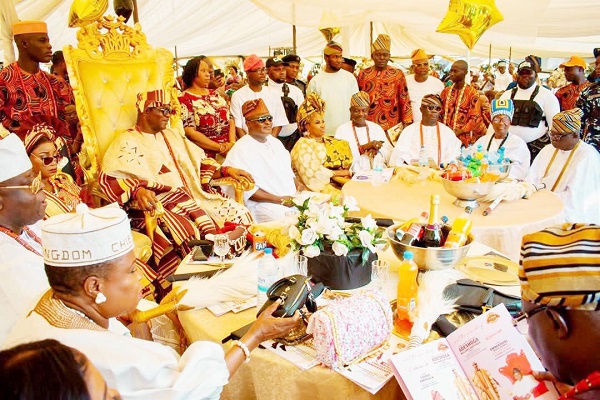
Leaders and residents of Ifako-Ijaiye Local Government Area and Ojokoro Local Council Development Area (LCDA) of Lagos State have commended Oba Adeshoga Adeyoola (Tomia I), the monarch of Orile-Alagbado, for his people-centred and impactful leadership as he celebrated his first anniversary on the throne.
The colourful ceremony, held in Alagbado, attracted a large turnout of political office holders, traditional rulers, community leaders, as well as youth and women groups from Ifako-Ijaiye, Ojokoro and adjoining communities.
Speaking at the event, the Member of the House of Representatives for Ifako-Ijaiye Federal Constituency, Benjamin Olabinjo, described the visible transformation in the kingdom as clear evidence of the monarch’s effective leadership. He assured Oba Adeyoola of continued government support for the Orile-Alagbado community.
The celebration featured rich cultural displays, musical performances and special prayers for the monarch’s long life, wisdom and a peaceful, prosperous reign.
Dignitaries, including the Speaker of the Lagos State House of Assembly, Mudashiru Obasa; the Senior Special Assistant to the President on Grassroots Sports Development, Adeboye Adeyinka (Zulu Authority); and the Chairman of the Lagos State Council of the National Union of Road Transport Workers (NURTW), Alhaji Mustapha Adio (Sego), lauded the monarch for redefining traditional leadership through inclusiveness and development-driven governance.
They noted that within one year on the throne, Oba Adeyoola has shown strong commitment to youth development, sustained advocacy against drug abuse, promotion of women empowerment and emancipation, and a firm stance against all forms of abuse against women.
Among the dignitaries present were the Chair of Ojokoro LCDA, Mrs Oluyemisi Rosiji; a member of the Lagos State House of Assembly representing Ifako-Ijaiye II, Emmanuel Olotu; as well as Dayo Fafunmi, Tunde Oyekunle, Abdul Makinde, Mobolaji Sanusi, Dr Idris Salako, Dr Adeleke Waleeh Ipaye and Abduljelil Oseni.
Also in attendance were leaders of the All Progressives Congress (APC), members of the Ojokoro Legislature, traditional rulers including Ndigbo cap chiefs, Community Development Committee (CDC) leaders, and representatives of youth and women groups across Ifako-Ijaiye.