
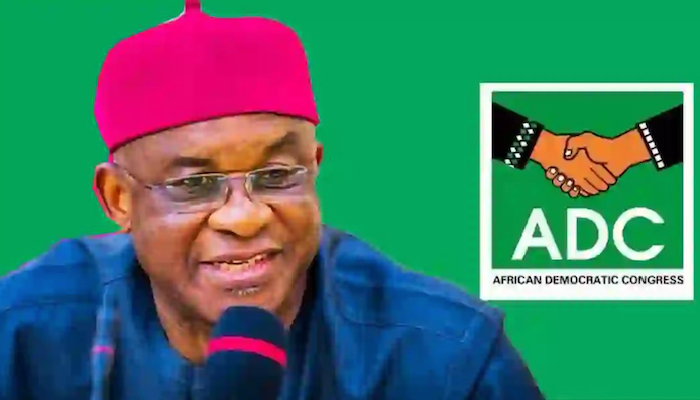
Uncertainty continues to trail the planned national convention of the African Democratic Congress (ADC), led by David Mark’s faction, as party members express concerns over the preparedness and legitimacy of the exercise scheduled to hold in Abuja on Tuesday.
Key details about the event, including the venue and security arrangements, remain undisclosed, heightening anxiety among supporters and stakeholders. The lack of clarity has further fueled doubts about the party’s ability to successfully host a convention expected to attract delegates nationwide.
Despite the uncertainty, a senior party chieftain insisted the event would proceed as planned. According to the source, preparations are ongoing and the convention aligns with schedules already submitted to the Independent National Electoral Commission (INEC). However, he declined to reveal the expected number of delegates, noting that further details would be released “in due course.”
The party had earlier constituted a 22-member National Convention Central Coordination Committee chaired by Liyel Imoke, alongside 339 members spread across 11 subcommittees to oversee the process.
Legal concerns, however, cast a shadow over the planned gathering. INEC Chairman Joash Amupitan warned that proceeding with the convention could violate a subsisting court order. The directive, issued by the Court of Appeal, mandates both factions of the party to maintain the status quo pending resolution of their leadership dispute.
Amupitan cautioned that disregarding the court order could have serious consequences, drawing parallels with past electoral disputes where victories were later nullified by the courts.
Meanwhile, Transcorp Hilton Abuja has denied allegations that it cancelled a booking made by the party for the convention. The hotel described the claim as “false and fabricated,” reiterating its willingness to host any organisation that meets its booking requirements.
Across the country, internal divisions within the ADC are intensifying. Several state chapters have descended into chaos, with parallel congresses producing multiple factional leaders.
In Edo and Enugu states, three rival chairmen emerged in each chapter following disputed congresses. Similar fractures were recorded in Kaduna, where opposing factions disagreed over the postponement of congresses, and in Ondo, where rival groups conducted separate exercises in defiance of INEC’s directive.
The crisis has also spilled into the courts. In Adamawa State, a High Court ordered the suspension of all ADC congresses pending the determination of a suit filed by a party leader.
Elsewhere, Ogun State witnessed parallel congresses, with one faction aligned with David Mark producing a new leadership and dismissing outcomes from a rival gathering as unconstitutional.
Despite the widespread discord, some chapters, including Delta and Rivers, have pushed ahead with congresses and reconciliation efforts aimed at strengthening internal cohesion ahead of the national convention.
With legal battles unresolved, factions multiplying, and trust eroding within its ranks, the ADC faces a defining moment as it approaches a convention that could either unify the party—or deepen its fractures ahead of the 2027 general elections.